Sustainable Alternatives for Next-Generation Magnetic Technologies
Posted in News Story
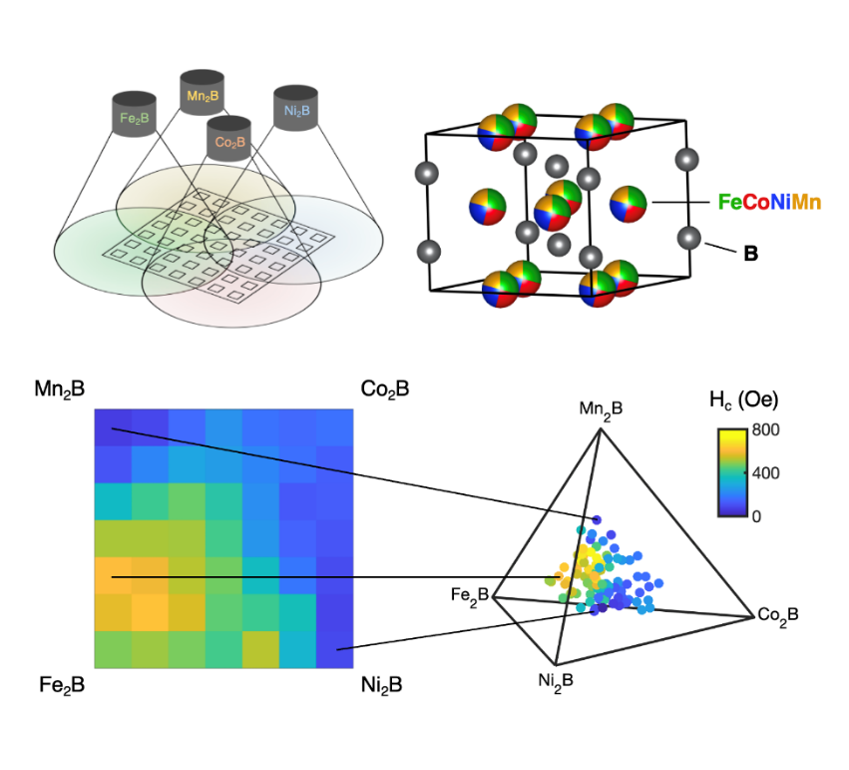
Led by graduate student Willie Beeson, Professors Kai Liu and Gen Yin’s team in the Physics Department at Georgetown University have discovered a new class of strong magnets based on high entropy borides using earth-abundant transition metals and boron. These materials offer a compelling new strategy for sustainable magnet design without using rare-earths or precious metals. Their results are just published in the journal Advanced Materials.
Beeson defended his Ph.D. in spring 2025, and is now a staff member at Seagate Technology. The team also includes former postdoctoral fellows Dhritiman Bhattacharya and Dinesh Bista, and graduate student Bradley Fugetta. Bhattacharya is now an Assistant Professor of Electrical Engineering at Rowan University. Bista is a Senior Data Scientist at AT&T.
Read the full story by the College of Arts and Sciences here: https://college.georgetown.edu/news-story/georgetown-scientists-identify-sustainable-alternatives-for-next-generation-magnetic-technologies